
What Happened to Michelle Meyrink? The Real Genius Star Who Walked Away from Hollywood
Author
RewindZone Archive
Legacy Date
Legacy Archive
Status
Verified Archive
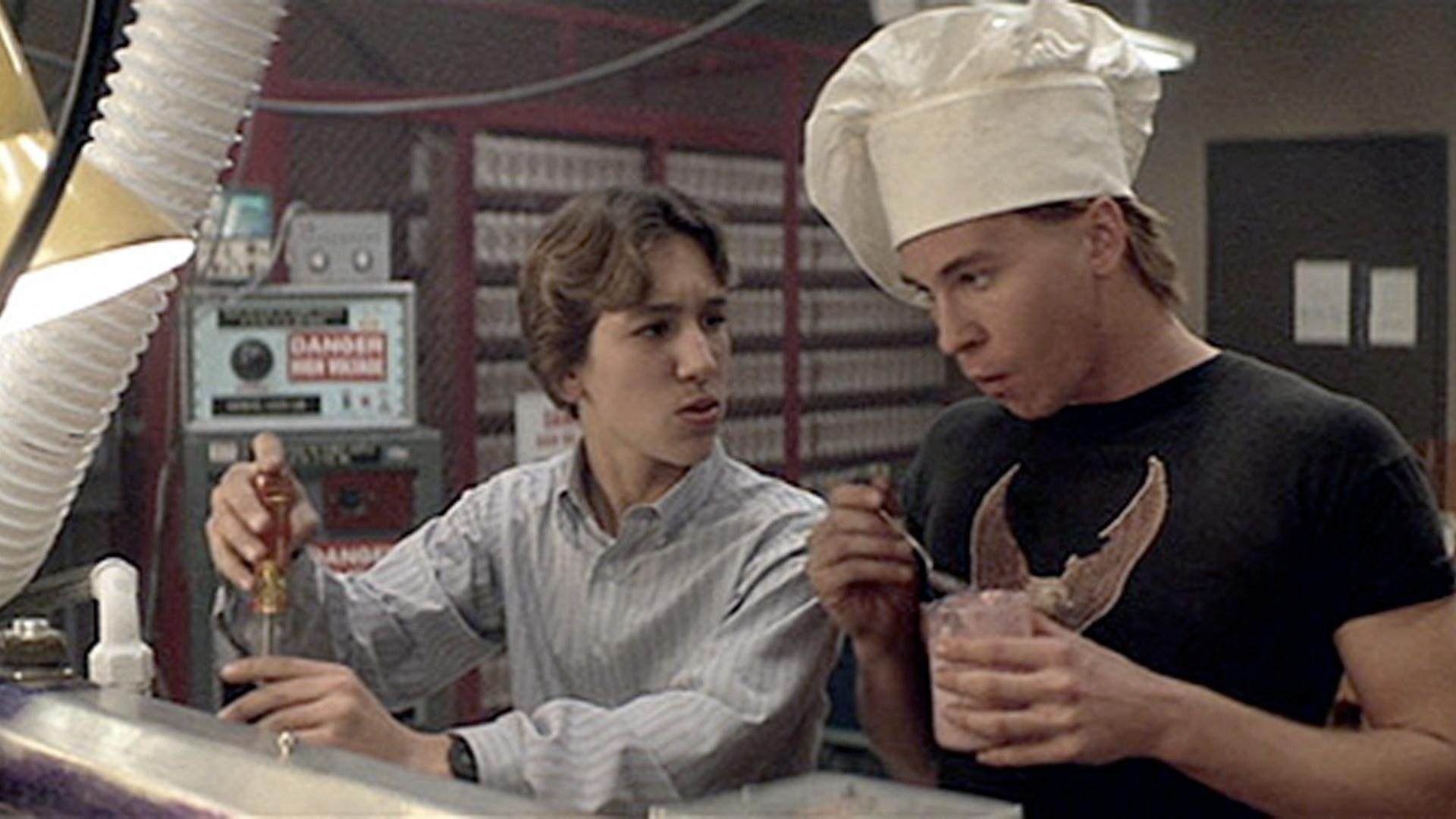
She’s hunched over a workbench in Real Genius, needles clicking, eyes racing ahead of everyone else in the room. Jordan Cochran doesn’t sleep much. She doesn’t slow down. She knits, calculates, interrupts, vanishes, reappears. In a film full of smart mouths and fast talkers, she’s operating on a different frequency.
That performance — played by Michelle Meyrink at just 22 — is the one most people remember. Roger Ebert called Jordan an “authentically eccentric campus type,” and he was right. She felt observed rather than written.
Then something stranger happened.
Meyrink made roughly ten films in five years. She appeared in projects orbiting Francis Ford Coppola, Martha Coolidge, Nicolas Cage, Val Kilmer, and Keanu Reeves. And in 1989, aged 26 or 27, she stopped. No scandal. No comeback tour. No cautionary tale.
Here’s the charge, and it matters: Hollywood didn’t break Michelle Meyrink. It simply had no use for someone who refused to flatten herself into a repeatable product.
She didn’t disappear.
She chose to leave.
The Coppola Break: How a Vancouver Girl Landed The Outsiders
Michelle Meyrink grew up in Vancouver, far from the Los Angeles casting circuit, and that distance matters. When Francis Ford Coppola assembled the young ensemble for The Outsiders in 1983, he wasn’t looking for polish. He wanted faces that felt lived-in.
Meyrink was around 20 when she was cast as Marcia, a small but visible role within an ensemble that included Matt Dillon, Tom Cruise, Rob Lowe, Patrick Swayze, and Emilio Estevez. The film shot in Tulsa, Oklahoma, and Coppola famously kept the young cast living and training together, cultivating the illusion of a generation in real time.
It worked.
For many young actors, a Coppola credit would have been a calling card — something to leverage, expand, monetise.
Meyrink didn’t need to leverage it.
The same year, she appeared in Valley Girl, directed by Martha Coolidge, playing Suzi Brent opposite a then-unknown Nicolas Cage. Shot on a modest budget and released in April 1983, the film became a sleeper hit, grossing more than $17 million in North America.
Something else happened behind the scenes.
Coolidge noticed Meyrink not for her look, but for her attention — the way she listened, the way she didn’t push scenes outward. Around this time, Meyrink trained at the Loft Studio in Los Angeles, run by Peggy Feury. Alumni included Cage, Sean Penn, and Eric Stoltz, and the training was famously rigorous: long sessions, repetition, discomfort, silence.
This wasn’t casual experimentation.
At 20, Meyrink was already doing the kind of work most actors don’t encounter until much later — if ever.
1984–1985: Two Roles That Made Her Unforgettable
By 1984, Meyrink was suddenly familiar — and still oddly unclassifiable.
She landed the role of Judy in Revenge of the Nerds after beating out Joan Cusack and Sarah Jessica Parker. Released in August 1984, the film grossed around $40 million in the US and became one of the decade’s defining teen comedies.
Judy could easily have been a disposable girlfriend role.
Meyrink didn’t play it that way.
Watch closely and you’ll see it: the intelligence under the comedy, the self-possession under the softness. Judy isn’t rescued by the nerds — she chooses them. That distinction matters, and in a film this broad, it’s quietly radical.
A year later came the performance that sealed her reputation.
In Real Genius (1985), Meyrink played Jordan Cochran, a hyperactive physics prodigy orbiting Val Kilmer’s charismatic lead. Jordan is brilliant, restless, socially sideways. She doesn’t explain herself. She doesn’t soften.
Roger Ebert noted Jordan as “a genuinely odd presence,” the kind of character films usually sand down or explain away.
Seen now, Jordan reads as something Hollywood almost never gave us in the mid-1980s — a young woman defined by intellect first, years before conversations about women in STEM became mainstream.
Meyrink was barely out of her teens.
And she’d already delivered the performance people would still be asking about forty years later.
The Martha Coolidge Connection
Martha Coolidge directed Meyrink three times in quick succession: Valley Girl (1983), Joy of Sex (1984), and Real Genius (1985). One of those films has faded. The pattern hasn’t.
Coolidge didn’t cast Meyrink for glamour or pliability.
She cast her for resistance.
Across those films, Meyrink plays women who don’t perform femininity on cue — alert, observant, slightly ahead of the room. Coolidge, one of the few women directing studio-backed films in the early 1980s, understood how easily that quality gets mislabelled as “difficult” or “unmarketable.”
This wasn’t indulgence.
It was trust.
And trust like that tends to reveal an uncomfortable truth: some actors aren’t built for long Hollywood careers, not because they lack talent, but because they refuse to simplify themselves.
What Happened to Michelle Meyrink: The Exit Nobody Expected
By the late 1980s, Meyrink was still working.
She appeared in Nice Girls Don’t Explode (1987) and then in Permanent Record (1988), a teen drama about suicide starring Keanu Reeves. The film underperformed commercially, but critics praised its restraint. Ebert described it as “emotionally honest.”
It would be Meyrink’s final screen appearance.
In 1989, she stepped away from acting. She was in her mid-to-late twenties.
Accounts from later interviews and secondary sources suggest a simple motivation: she wanted more from life than the profession was offering. More depth than auditions. More agency than typecasting. More meaning than waiting rooms.
That’s what makes her story disruptive.
Actors aren’t supposed to leave when the system still wants them.
Meyrink stepped away while still employable, still recognisable, still viable.
That choice — deliberate, unspectacular, irreversible — is rarer than any comeback.
Finding Zen: The Years Away From the Industry
After leaving acting, Michelle Meyrink turned inward.
In the early 1990s, she became seriously involved in Zen Buddhism and spent time in the Dominican Republic, reportedly to be closer to family. It was a clean break from casting rooms and production schedules.
By the mid-1990s, she had returned to Vancouver.
She later married John Dumbrille, whom she met through the Zen Centre of Vancouver, and the couple went on to have three children. By the early 2000s, they were living on Bowen Island, just off the coast of British Columbia.
In 2004, they appeared together on the Canadian television series Quiet Mind, which documented Zen Buddhist practice. It remains the only known on-camera appearance Meyrink has made since leaving acting.
No retrospectives. No nostalgia.
Just practice.
The Full Circle: Actorium and a Different Kind of Stage
In 2013, Meyrink founded Actorium, an acting school in Vancouver that began modestly and deliberately.
Classes were long. Phones were discouraged. Mirrors weren’t central. Silence wasn’t something to escape — it was something to work through.
Actorium draws from Stanislavski, Meisner, and Method traditions, filtered through Meyrink’s Zen practice. Presence over performance. Listening over display. Truth before technique.
The Loft Studio influence is unmistakable.
By the mid-2020s, Actorium had grown into a structured programme with multiple instructors, offering foundational classes, a two-year Role Immersion track, and community workshops.
Meyrink didn’t reject acting.
She rejected the industry’s definition of success — and kept the work.
Still Teaching, Still Engaged
In recent years, Michelle Meyrink has continued to write teaching notes and reflections for the Actorium website, focusing on process rather than product.
She has also spoken publicly on occasion. She has appeared on small, independent podcasts, including a 2023 conversation on Python’s Paradise, and in a February 2025 appearance on Only In One Take Radio she discussed presence, discipline, and the limits of performance.
“Acting isn’t about showing emotion,” she said. “It’s about being present enough that something real can happen.”
There is no public social media presence. No nostalgia circuit. No convention appearances.
She has not expressed interest in returning to acting.
The Kilmer Connection and Real Genius at 40
The death of Val Kilmer in April 2025 renewed attention on Real Genius, which marked its 40th anniversary the same year. The film has aged better than expected — not because of its jokes, but because of its characters.
Jordan Cochran stands out now more than ever.
In 1985, a brilliant, eccentric young woman whose identity wasn’t organised around romance or approval was an anomaly. Meyrink played her without apology or explanation.
Audiences have been catching up ever since.
Where She Is Now
Today, Michelle Meyrink teaches acting in British Columbia, guiding students through repetition exercises, scene work, and long stretches of listening that most classes rush to fill. She runs Actorium as a practice, not a brand.
There are no casting profiles. No comeback rumours.
She didn’t vanish.
She made a clean exit — and built something quieter, harder, and more durable in its place.
Somewhere in a Vancouver studio, a student is sitting still, listening properly for the first time, while needles click in the background.
That part never stopped.