
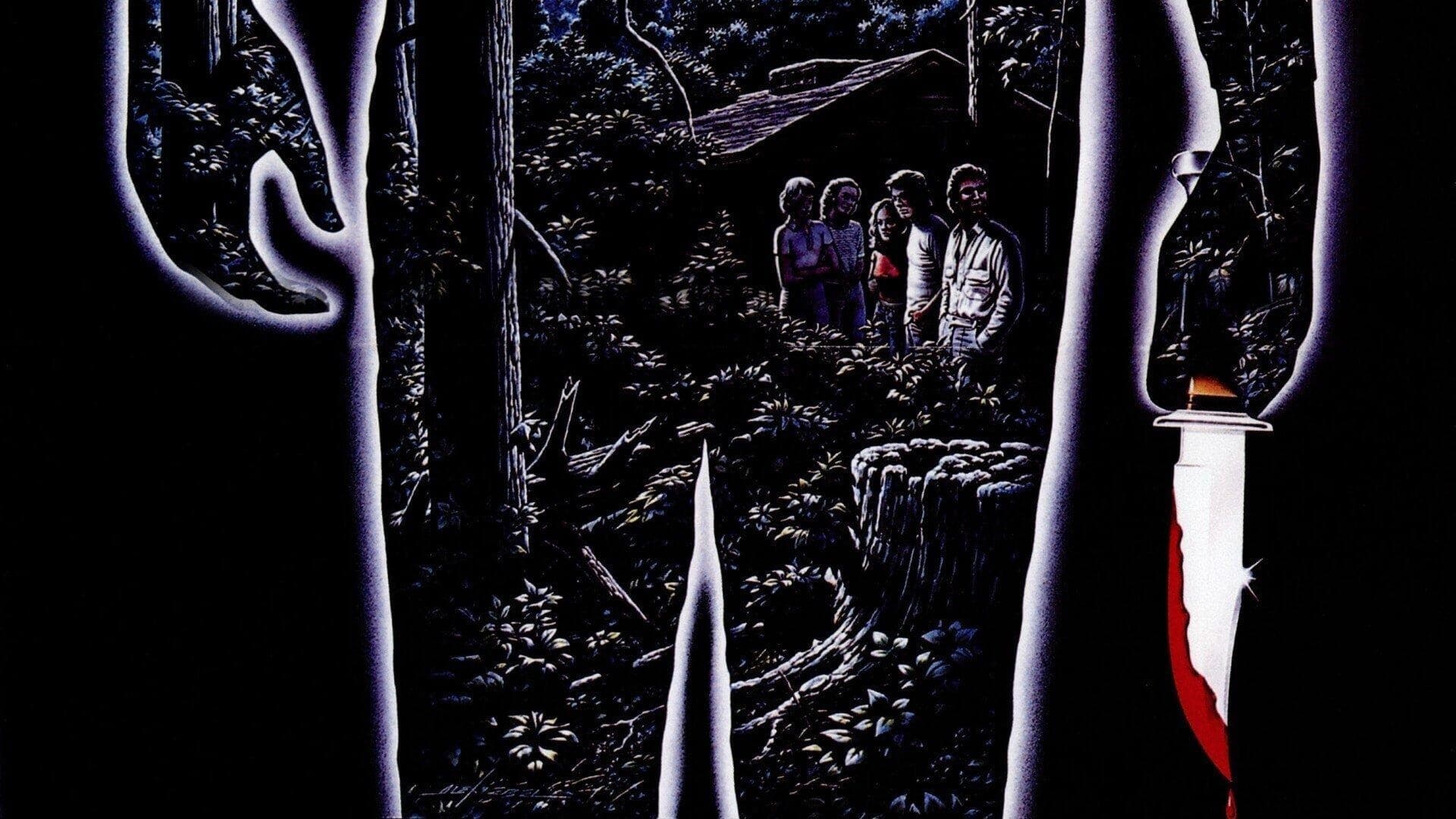
What Happened To Adrienne King: Friday The 13th And Stalker Nightmare
Author
RewindZone Archive
Legacy Date
Legacy Archive
Status
Verified Archive
Picture this: you're 23 years old. You've just starred in the biggest horror film of 1980—a blockbuster that grossed nearly $60 million worldwide on a shoestring budget. Your photograph appears on the front page of the New York Times Arts section. Your building manager finally gives you keys to that gorgeous sun-drenched apartment overlooking Central Park you'd been chasing for years.
Eighteen months later, a stranger breaks into your apartment holding a gun.
He's been following you for over a year. New York to Los Angeles to London. Leaving Polaroids of your daily activities under your door—sometimes tucked inside Chinese takeaway menus. The police won't help. "What would you expect?" they tell you. "Look at the movie you did."
That's Adrienne King.
The actress who became one of cinema's first iconic "final girls" as Alice Hardy in Friday the 13th—the sole survivor who decapitates a killer and lives to tell the tale. She should have been Hollywood's next scream queen, returning for sequel after sequel like Jamie Lee Curtis had with Halloween.
Instead, she vanished for three decades.
Not gradually. No farewell tour or graceful retirement announcement.
Just gone.
Last theatrical film role: 2002. Last screen appearance of any kind: a direct-to-video comedy in 2009. First convention appearance after the stalking: 2003, where 800 people watched her tell the truth about why Alice Hardy died in Part 2's opening minutes.
The stalker took eighteen months of her life. The ice pick that didn't retract on the Part 2 set took her acting career. What she built in the aftermath—voiceover work for Titanic and Melrose Place, uncredited stunt work on Ghostbusters, award-winning wines themed around the franchise that traumatised her—is a story Hollywood never tells.
This is what happened to Adrienne King.
The Building Manager Who Wouldn't Budge
Adrienne King had been working since she was six months old.
First commercial: Ivory Soap, New York City. By age nine, she'd landed a featured role in the Hallmark Hall of Fame production of Inherit the Wind, working alongside Ed Begley, Melvyn Douglas, and Diane Baker.
By her teens: over 100 television and radio spots. Tapped with Sammy Davis Jr. in a 7-Up commercial. Two years of intense acting study with the legendary Bill Esper.
But in 1979, she was living in a tiny studio apartment on East 56th Street, doing bits in soap operas and spinning in the background of Saturday Night Fever as a disco dancer.
She wanted that one-bedroom apartment.
The sun-drenched pre-war overlooking Central Park. Her building manager Jerome controlled six rent-controlled properties, and he was not impressed by off-off-Broadway productions or background work in John Travolta films.
"When you tell me you're actually speaking in a movie," Jerome told her, "not spinning in the background behind John Travolta, maybe then we'll talk one bedroom."
That motivation drove King through the summer of 1979 when she heard about a little independent horror film called Friday the 13th.
Barry Moss and Julie Hughes were casting. King didn't have a theatrical agent. The proper route was closed. But she believed in side doors and back windows, and through a networking chain—her friend Bill Love's boss's friend Pam, who knew Barry—she got into the audition room.
Callback after callback. Then a screen test.
"I'm pretty sure my scream nailed it," she remembers.
Finally, she was Alice. The sole survivor.
Filming began right after Labour Day 1979 at Camp No-Be-Bo-Sco in Blairstown, New Jersey. Scrappy, low-budget, gruelling night shoots. King brought her own wardrobe, incorporated her love of sketching into Alice's character, and performed her own stunts—including the intense lakeside fight with Betsy Palmer that required no doubles because the production couldn't afford them.
She had no idea she was making a film that would change horror cinema forever.
One of her favourite memories: sketching from the lifeguard chair whilst the crew set up shots, looking down on Kevin Bacon, Harry Crosby, and Mark Nelson doing push-ups on the sand. Everyone happy. Young New York actors chomping at the bit to work their craft. The warmth and sunshine and joy of being part of something extraordinary.
A freeze-frame moment. She remembers it like it was yesterday.
Jerome Gets His Invitation
Friday the 13th opened 9th May 1980 to savage reviews and massive box office.
Critics hated it. Gene Siskel published Betsy Palmer's address in his review out of sheer outrage. Janet Maslin of the New York Times gave away the ending in her opening paragraph, assuming no one would want to see it anyway.
Audiences thought differently.
The film exploded. King's performance as Alice Hardy was praised even by detractors—she brought vulnerability, strength, and genuine terror to a role that could have been cardboard. Her final confrontation with Mrs Voorhees, culminating in that iconic beheading, made Alice one of horror's first true "final girls" who fought back with vengeance rather than cowering.
King sent Jerome an invitation to the cast-and-crew screening.
The building manager came through. Watched the movie. Gave her a hug. Handed her the keys to that beautiful sun-drenched one-bedroom apartment overlooking Central Park.
Her photograph appeared on the front page of the New York Times Arts and Leisure section with her name underneath.
Everything was converging. New home, new movie, new life. What a euphoric feeling, riding the enormous wave of the biggest blockbuster Paramount released that summer of 1980.
Unfortunately, her joyful existence was about to take a very bizarre twist.
Polaroids Under the Door
The stalking began almost immediately after the film's release.
At first: enthusiastic fan mail. Then it became something else.
The man would leave Polaroids under King's apartment door—photos of her from the day before. Buying groceries. Having lunch. Working out. Sometimes the Polaroids came tucked inside Chinese or Italian takeaway menus.
This was 1980. No mobile phones. No security cameras. No Ring doorbells. No digital footprints to trace.
For eighteen months, King lived in escalating terror.
She'd leave her New York apartment and spot him following. She'd relocate to Los Angeles—he'd turn up there too. She fled to London—still he found her.
When she complained to authorities, their response was dismissive: "Well, what would you expect? Look at the movie you did."
Stalking wasn't taken seriously in the early 1980s. No laws against it. No protocols for protection. The authorities had no framework for understanding the psychological terrorism King was experiencing.
It wouldn't be until Rebecca Schaeffer's murder years later that stalking would finally be recognised as a serious crime.
Then came the night he broke into her apartment.
King has never fully detailed what happened when the stalker held a gun to her head. That's her right.
She survived. But when the stalker was eventually identified and confronted after eighteen months of terror, his obsession had nothing to do with being a horror fan. He'd seen Friday the 13th casually with friends and fixated on King because she reminded him of someone else entirely—someone from his past "who had done something horrible to him."
A connection that existed only in his fractured mind.
The experience shattered King's sense of safety. The thought of returning to any film set, of drawing more public attention to herself, felt impossible.
The Night That Ended Everything
When Paramount began developing Friday the 13th Part 2 immediately after the first film's success, Adrienne King was the obvious choice to return.
Alice Hardy was the sole survivor. The franchise needed continuity.
But King's world was far from normal.
People she trusted talked her into returning for Part 2, assuring her it would be minimal.
What they didn't tell her: the entire film had already been shot. She was being brought in for a single night—the last night of production with a skeleton crew.
No Jason. No real support.
Just what she would later describe as "the disrespectful, dishonest director" Steve Miner.
King never received a script.
That entire phone call with Alice's mother that opens the film? Improvised on the spot.
"At least I should have gotten writer's credit," she'd reflect years later.
The shoot was torturous—one long night in Connecticut when the exhausted crew desperately wanted to wrap and go home before a holiday weekend.
Then came the moment that would seal Alice Hardy's fate and King's departure from the franchise.
During the ice pick murder scene, the props department forgot to check whether the retractable ice pick actually retracted.
It didn't.
When it made contact with King's head during filming, the pain was real. Her scream—"OW!!!"—became the most authentic moment of her career, captured forever on film as Alice Hardy's death.
King left the set that night knowing she was done. Not just with Friday the 13th. Done with acting entirely.
The result: one of horror cinema's most shocking openings. Alice Hardy, survivor of the first film's massacre, is killed within the first five minutes of the sequel. Jason Voorhees emerges from hiding in her apartment and drives an ice pick through her skull.
The franchise's protagonist was dead.
With her died any possibility of the continuity that other slasher series would exploit for decades.
Years later, King would maintain that Alice never really died—that the death scene was a post-traumatic stress dream, that Alice wouldn't have been caught dead in "that ugly green outfit," that she's still alive somewhere in the deep woods, "painting beautiful canvases and drinking fine Crystal Lake Wine."
A comforting fiction.
For the actress who'd brought Alice to life, the nightmare was very real.
Flight to London
In 1984, Adrienne King fled to London.
She enrolled at the Royal Academy of Dramatic Art for their summer Shakespeare programme—one of the world's most prestigious drama schools—but her goal wasn't to launch a British acting career.
She needed distance. Safety. Somewhere the stalker couldn't find her.
RADA gave her structure, purpose, and the chance to disappear into serious theatrical training far from Hollywood's spotlight. But PTSD doesn't respect international borders.
When King eventually returned to the States, she tried to resume her on-camera career. Her agent secured her a role on All My Children—everything was terrific, the role was hers.
Then, as she prepared to go on camera, King had a major anxiety attack.
The panic was overwhelming. She couldn't do it.
"You know," her agent said gently, "at some point you'll be able to, but in the meantime, let's focus on voiceovers."
That moment crystallised a painful truth: King was more damaged psychologically from the stalking experience than she'd realised.
She made a decision that would define the next two decades.
She would work in entertainment, but she would never again appear on screen.
The Invisible Years
Voice work became King's refuge.
As an ADR (automated dialogue replacement) artist, she could earn a living in film and television whilst remaining completely invisible to the public.
For seven years, she looped dialogue for Melrose Place.
She worked on major studio films: Titanic. What's Eating Gilbert Grape. Jerry Maguire. While You Were Sleeping.
Her voice appeared in countless productions. Her face never did.
Perfect camouflage.
But here's what nobody knew for decades: in 1984, King also worked as an uncredited stuntwoman on Ghostbusters.
Stunt coordinator Cliff Cudney hired her for two weeks. "You survived F13!" he told her. "You're officially a stuntwoman in my book!"
She made more money from those two weeks on Ghostbusters than from all her Friday the 13th residuals combined.
Jumping out of the way of crazy taxi cabs. Running through Central Park West. Whatever the production needed.
You won't even find it on her IMDb page.
For nearly three decades, Adrienne King existed in Hollywood's shadows—present but unseen, working but unknown.
To most of the world, Alice Hardy's actress had simply vanished.
The Dusty Box
Away from cameras, King built a life that had nothing to do with horror films.
In 1987, she married Richard Hassanein—a producer and president of United Film Distribution (UFD), the company responsible for releasing George A. Romero's Dawn of the Dead, Day of the Dead, and Creepshow. Richard understood her need for privacy and stability.
Together, they travelled the world attending film festivals in Cannes and Milan whilst King sketched and watercoloured the same European landscapes her favourite Impressionists had painted a century earlier.
Work took them to Los Angeles in 1994, where King looped for seven seasons on Melrose Place whilst working across various Hollywood studio lots.
In 2002, author Peter Bracke tracked her down for his book Crystal Lake Memories, convincing her that the devoted and ever-growing global Friday the 13th community deserved to know what had happened to Alice Hardy's actress.
The day after the franchise's 25th anniversary celebration in Hollywood in May 2005, King and Richard took a long drive up the California coast.
They unexpectedly discovered their future home in Southern Oregon.
Two months later, they'd packed up Los Angeles entirely.
Whilst unpacking in her new art studio overlooking their river paradise, King came across a dusty box labelled "Friday the 13th."
Inside: treasure.
Her turquoise jewellery from the film. Her sketchpad. Cowboy boots. Never-before-seen Polaroids from set.
And Sean Cunningham's original director's notes from that infamous beach fight scene.
Two pages of steno paper covered in Sean's handwriting. Coffee stains. Thirteen choreography points—complete coincidence.
Those notes became the centrepiece of a limited edition poster King created for fans.
It's the only piece of Friday the 13th art Sean Cunningham has hanging in his office or home.
Crystal Lake Wines
In 2010, King partnered with Valley View Vineyards in Oregon's Rogue Valley to create Crystal Lake Wines—a line of award-winning vintages themed around the franchise.
Survivor's Syrah. Cabin A Sauvignon. Midnight Merlot. Jason Rising Red.
Her painting "Alice in Canoe" graces the labels. She has her own Crystal Lake Wine corner at the winery where her paintings hang alongside signed bottles.
Reclaiming the very thing that had traumatised her and turning it into entrepreneurship.
Five years of success with no advertising or marketing. Strictly word-of-mouth and Facebook.
She also discovered she had a serious talent for painting. Her artwork—often featuring horror themes and camp imagery—began selling at conventions and through her website. Sketching had been written into Alice Hardy's character. Now it became King's creative outlet.
For the first time since 1980, King felt like she was living rather than surviving.
Life in Southern Oregon with Richard and their German Shepherd Angie. Creating art in her studio with views of the valley and the gentle rush of the river.
It was everything she'd needed.
800 People in a Freezing Ballroom
The resurrection began in January 2003.
Peter Bracke's book Crystal Lake Memories had revealed King's story to the world, and fans crowded into a ballroom at the Chiller Theatre convention in New Jersey wanting to meet the woman who'd played Alice Hardy.
Eight hundred people. More than King had ever imagined.
Freezing day. But they came.
When the Q&A began, the first question came immediately: "Why did you leave in Part 2? Why did you let them kill you?"
King told them the truth.
Not the sanitised version. The real story—the stalking, the terror, the gun, the year and a half of psychological torment.
She didn't draw it out or seek sympathy. She just let them know she hadn't abandoned them.
Not a dry eye in the audience.
Big, tattooed Harley Davidson guys approached her afterwards with tears streaming down their faces.
"I want you to take my number," they told her, "and if anybody ever bothers you, you tell me."
Some of those fans were FBI agents.
To this day, King has two on her speed dial.
"That's what healed that little piece of my heart that still needed healing," King reflects, "that I didn't even know needed healing."
The horror convention circuit had exploded in the intervening decades. What had once been niche gatherings had become sprawling celebrations where actors from genre classics could meet the people who'd grown up loving their work.
King tentatively began attending, testing whether she could handle public appearances without triggering the old fears.
To her surprise, she loved it.
The fans weren't stalkers. They were people who understood what Alice Hardy represented, who appreciated that she'd helped create something that mattered to them.
The Comeback Nobody Expected
In 2010, something unexpected happened.
Adrienne King decided to act again.
The film was Psychic Experiment—a low-budget sci-fi horror that would never trouble box office charts or awards ceremonies. But it represented something profound.
King's willingness to step back in front of a camera after 28 years away.
She followed it with The Butterfly Room in 2012, appearing alongside fellow horror icons Barbara Steele, Heather Langenkamp, and Camille Keaton. Small roles in Candy Corn and Killer Therapy followed.
In 2021, she even reprised Alice Hardy for the first time in 40 years in the fan film Jason Rising.
King began appearing regularly at horror events across America and internationally. Manchester. Pensacon. Midsummer Scream in Long Beach.
She became a fixture on the circuit, sharing stories and posing for photos with fans who treated her with respect and genuine affection.
After fleeing to London to escape recognition, she was now actively seeking it out on her own terms.
The Franchise That Never Was
Part of King's appeal at conventions is the "what if" factor.
Horror fans can't help but wonder: what would the franchise have looked like if Adrienne King had been able to stay?
Friday the 13th now has three—going on four—generations of fans. King is often surprised by how young audiences connect with the original film, especially those who've grown up with modern CGI and video games.
When she asks them why they love it, they give her the same answer: "It's real."
That authenticity matters.
Alice Hardy wasn't just a survivor—she was the first to flip the script.
Before her, horror heroines were passive victims waiting to be rescued or killed. Alice Hardy picked up a machete. Alice Hardy fought back with vengeance rather than cowering. Alice Hardy hunted her attacker through the woods and decapitated her.
Film scholar Carol Clover would later codify this in Men, Women, and Chainsaws as the "final girl" archetype, but Adrienne King created the blueprint in 1980. Vulnerable but fierce. Terrified but determined. The victim who becomes the victor through her own agency, not male intervention.
That's why Alice Hardy mattered.
She could have been Tommy Jarvis before Tommy Jarvis existed. The recurring protagonist who faced Jason across multiple films, growing from survivor to hunter, developing the psychological scars and obsessive determination that would have made her the franchise's emotional centre.
Instead, Friday the 13th became a series where the killer was effectively the protagonist and the victims were interchangeable meat.
Other franchises understood the assignment. Halloween had Laurie Strode. A Nightmare on Elm Street had Nancy Thompson—at least for two films. Even Scream built its identity around Sidney Prescott's journey across four decades.
Friday the 13th had no such continuity. No emotional through-line beyond Jason's unstoppable killing spree.
It took decades, but even Betsy Palmer eventually recognised what they'd created. After attending a convention where the original film screened—the first time she'd watched it theatrically in years—Palmer left King a voicemail.
"They made me watch the movie and I can't believe how really good it was!" Palmer gushed. "And you, Adrienne, were wonderful and oh, my, how fabulous was our fight on the beach?"
Astonished at how solid the movie was, how it held up, the chemistry they'd had, the calibre of acting.
That was incredibly special to King. The first time Betsy truly embraced their Friday the 13th. Palmer, who'd famously taken the role only to buy a new car, had finally realised it was something to be proud of.
Director Steve Miner has admitted that at the time of Part 2, Jason wasn't even a defined character yet. The mythology was being invented on the fly.
If King had been available, the entire franchise might have developed differently—less focused on gore spectacle, more invested in the psychological toll of surviving repeated encounters with an unkillable force.
Instead, the franchise spent 40 years searching for what it lost in those first five minutes of Part 2.
A protagonist audiences genuinely cared about.
The Bookend
In 2021, Adrienne King came full circle in the most unexpected way.
Author Grady Hendrix—who'd been devastated by Alice Hardy's death in Part 2 since childhood—wrote The Final Girl Support Group, a novel about horror movie survivors dealing with trauma decades later.
He asked King to narrate the audiobook.
It became a bookend to her career.
Friday the 13th in 1980. Then 40 years later, The Final Girl Support Group.
King voiced every character in the novel, channelling her own experiences with PTSD and recovery into the performance.
"The book brought back a tremendous amount of anxiety," she admits, "because it touched on some real situations and emotional pieces of my history."
Grady even named one character Adrienne as a tribute.
King cast the book like a movie in her head—Julianne Moore as one character, Charlize Theron as another, Nicole Kidman as Dr Carol.
Recording over two weeks in Ashland, Oregon, King performed multiple characters in single scenes. When she listened back: "How did I do that?"
The experience reminded her that decades of voiceover work—seven seasons of Melrose Place, major films like Titanic and Jerry Maguire—had given her skills she'd never showcased on camera.
The recording booth had been her safe space. Her refuge. The place where she could be an actress without being seen.
Where She Is Now
CRYSTAL LAKE SERIES - STATUS UPDATE (January 2026)
In October 2022, Peacock announced Crystal Lake—a Friday the 13th prequel series developed by Bryan Fuller (Hannibal, American Gods) and Victor Miller.
Adrienne King was cast in a recurring role. Details kept under wraps.
By May 2024: unconfirmed reports suggested the series was dead.
Bloody Disgusting contradicted them the following day: still happening, "retooling behind the scenes."
Current status: Development limbo. Neither officially cancelled nor actively moving forward.
For King, a familiar disappointment. The franchise has always been cursed by legal battles, rights disputes, and studio dysfunction.
She's 70 now. Lives in Los Angeles with Richard. Still paints. Still promotes Crystal Lake Wines. Still appears at horror conventions worldwide where younger actresses who've played final girls seek her out, wanting to meet the woman who created the archetype they inherited.
She's candid about the PTSD she still manages. The therapy that helped her reclaim her life. The strange gift the horror community gave her: the ability to transform trauma into celebration.
She no longer flinches when fans approach her. No longer sees threats in every interaction.
The stalker stole eighteen months. Stole her on-camera career. Stole the franchise continuity Friday the 13th desperately needed.
But not everything.
What does it mean when one of horror's most iconic heroines was driven out of Hollywood not by Jason Voorhees but by a real-life monster the authorities refused to take seriously?
Adrienne King delivered one of the 1980s' most influential performances in less than 90 minutes of screen time. Alice Hardy wasn't just a survivor—she was the first to flip the script, proving horror heroines could fight back with agency rather than waiting for rescue.
The tragedy isn't just that King never got to explore what Alice Hardy could have become. It's that we know exactly why.
What would the franchise have looked like if she'd stayed? If Alice had been the recurring protagonist facing Jason across multiple films? Halloween had Laurie Strode. Scream built its identity around Sidney Prescott. Friday the 13th spent 40 years searching for what it lost in those first five minutes of Part 2.
But here's what Hollywood doesn't understand about final girls: they're not defined by what they survive on screen. They're defined by what they survive after.
King's story doesn't have a triumphant third-act comeback or an A-list return. What she built instead is quieter: a life reclaimed.
She turned trauma into award-winning wines and a two-decade voiceover career that out-earned her residuals. She turned a freezing convention into a healing circle protected by fans with badges. When fans approach her now, they aren't just meeting an actress—they're meeting a woman who showed everyone how to bottle the darkness and sell it on her own terms.
That takes a different kind of courage than any final girl ever needed.
Does Alice Hardy still exist somewhere in the deep woods, painting and drinking Crystal Lake Wine? Or did she really die in those first five minutes of Part 2?
It doesn't matter.
Adrienne King is the ultimate final girl.
Not because she survived Camp Crystal Lake, but because she survived everything that came after.